What Makes It Possible
Behind almost every durable household invention sits a material that refuses to behave the way ordinary matter does. Ordinary glass shatters under sudden temperature swings; ordinary fabrics slide past one another; ordinary concrete cracks and lets rainwater rust its reinforcing steel. Here is how small changes in chemistry and microstructure turn passive surfaces into self-regulating tools.
Four Materials Doing Mechanical Work
Why True Borosilicate Glass Ignores Thermal Shock
Glass is a poor conductor of heat. When you pour boiling stock into a thick soda-lime glass jar, the inner wall tries to expand immediately while the cool outer wall stays rigid, creating tensile stress that snaps the glass apart. German glass chemist Otto Schott discovered in 1887 that replacing much of the soda and lime with 12–13% boron trioxide creates a looser atomic network that barely expands when heated.
Practical buyer note: many modern kitchenware brands switched from borosilicate to tempered soda-lime glass in certain regions. Tempered glass resists physical drops well, but true borosilicate handles direct thermal gradients nearly three times better.

Heat-Set Nylon Hooks & Peeling vs. Shear Geometry
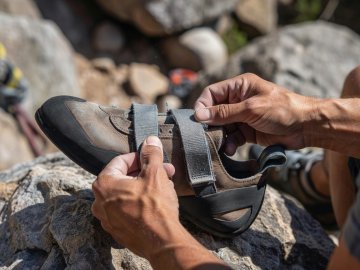
Why can a five-centimetre strip of Velcro support a 70-kilogram load hanging parallel to a wall, yet peel apart effortlessly with two fingers? The secret is load distribution. When you pull two parallel strips sideways (in shear), thousands of stiff nylon hooks—formed by weaving nylon loops under infrared heat and slicing one side of each loop—share the force simultaneously.
When you peel the strip back at a 90-degree angle, however, you concentrate all your finger force onto just one single line of hooks at a time, unfastening them sequentially like a zipper.
Self-Healing Concrete Powered by Dormant Limestone Bacteria
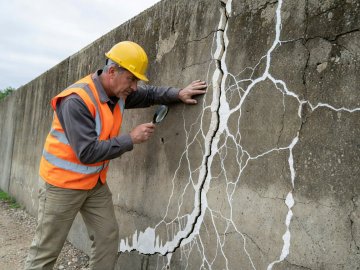
Concrete always develops hairline tension cracks. Once water seeps into those fissures, it corrodes the internal steel rebar. Microbiologist Hendrik Jonkers at TU Delft embedded spores of alkali-resistant bacteria (Bacillus pseudofirmus) alongside tiny biodegradable capsules of calcium lactate directly into the wet concrete mix.
The bacterial spores can remain dormant inside dry alkaline stone for up to two centuries. The moment a crack opens and rainwater trickles in, the bacteria germinate, consume the calcium lactate, and excrete solid calcite (limestone), sealing cracks up to 0.8 millimetres wide in three weeks.
Silica Aerogel Thin-Wall Building Insulation Blankets
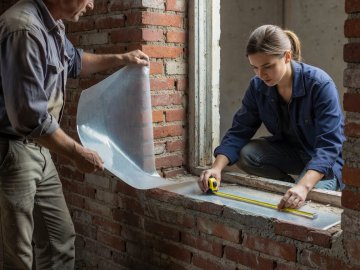
When renovating historic solid-brick apartments, adding 15 centimetres of mineral wool on the inside steals valuable room width. Silica aerogel—created by supercritical drying of a silica gel so the liquid evaporates without surface tension collapsing the nanopores—has pores smaller than the mean free path of air molecules (around 68 nanometres).
Because air molecules inside those tiny pores cannot collide freely to transfer heat by convection, a 10-millimetre flexible aerogel plasterboard blanket insulates as effectively as 45 millimetres of conventional foam.